
Objective
Build and document a lean HubSpot CRM setup demonstrating practical data modelling, lead capture, qualification, segmentation, deal management, task-based follow-up and reusable communication.
CRM SYSTEM DESIGN · PRACTICAL PROJECT
A practical CRM setup connecting lead capture with data structure, qualification, pipeline management and organized follow-up.
PROJECT OVERVIEW
A self-directed HubSpot implementation for Aris Digital Hub. Demo and test records were used to build a coherent CRM workflow that can be demonstrated and reviewed in practice.
The system follows a lean digital marketing workflow: capture a consultation request, organize contact and business information, qualify the opportunity, manage a demo deal, record the next action and support consistent follow-up.
The challenge
Build and document a lean HubSpot CRM setup demonstrating practical data modelling, lead capture, qualification, segmentation, deal management, task-based follow-up and reusable communication.
MY CONTRIBUTION
Defined the CRM scope and naming convention ADH | Asset Type | Purpose.
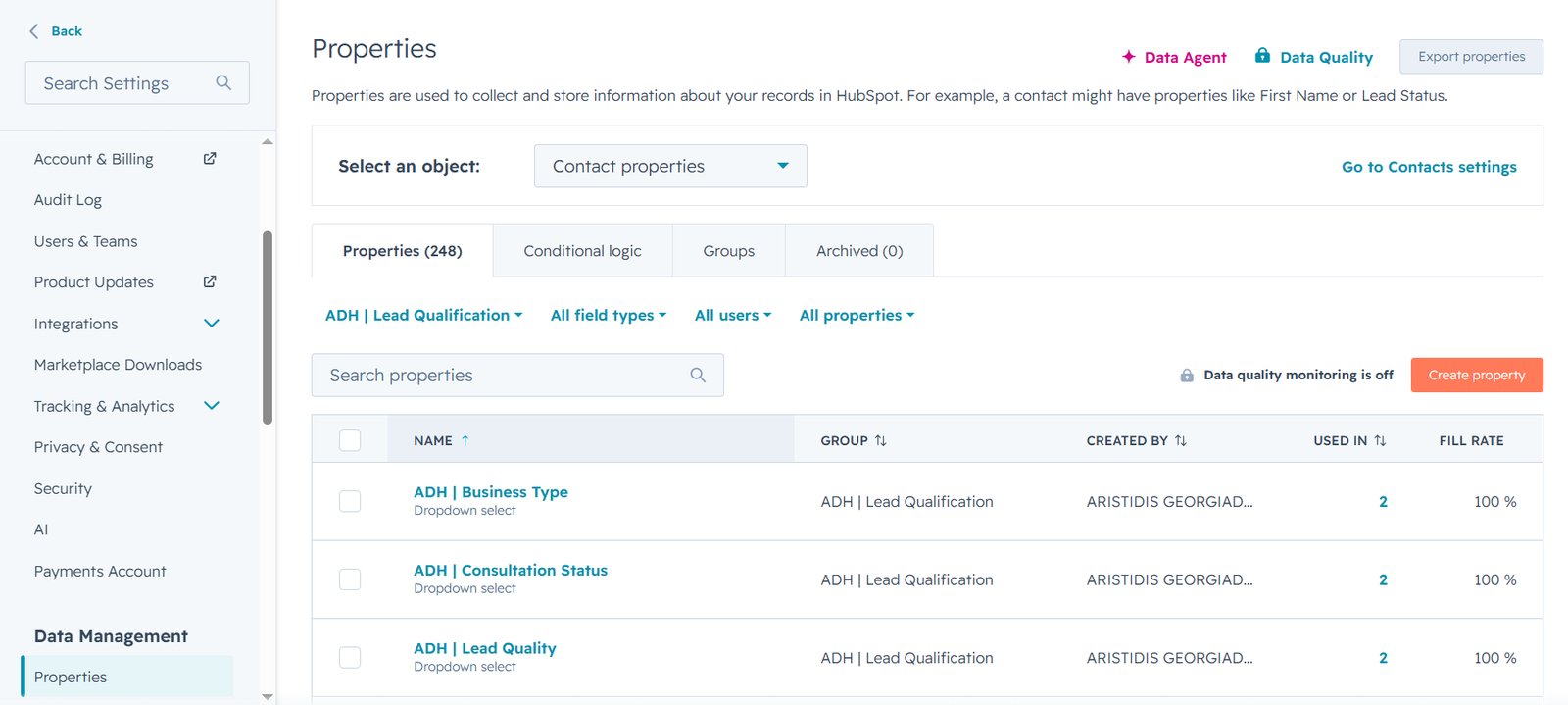
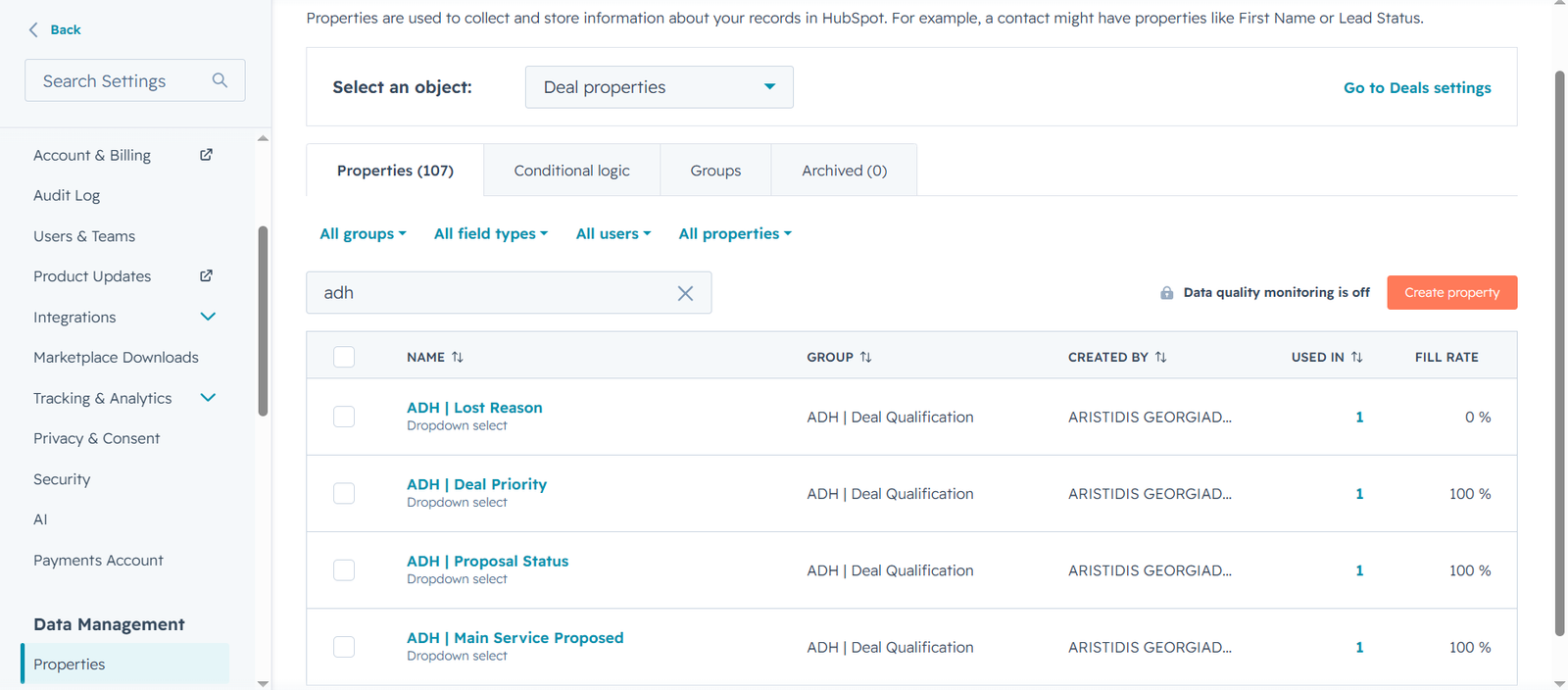
Configured custom properties for Contacts, Companies and Deals.
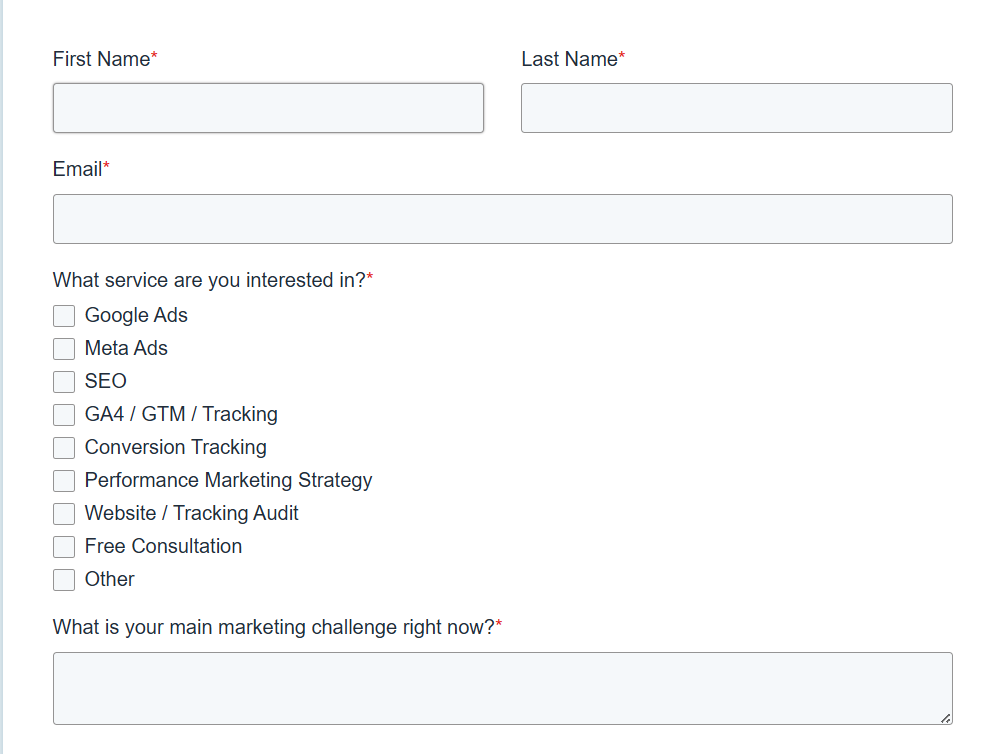
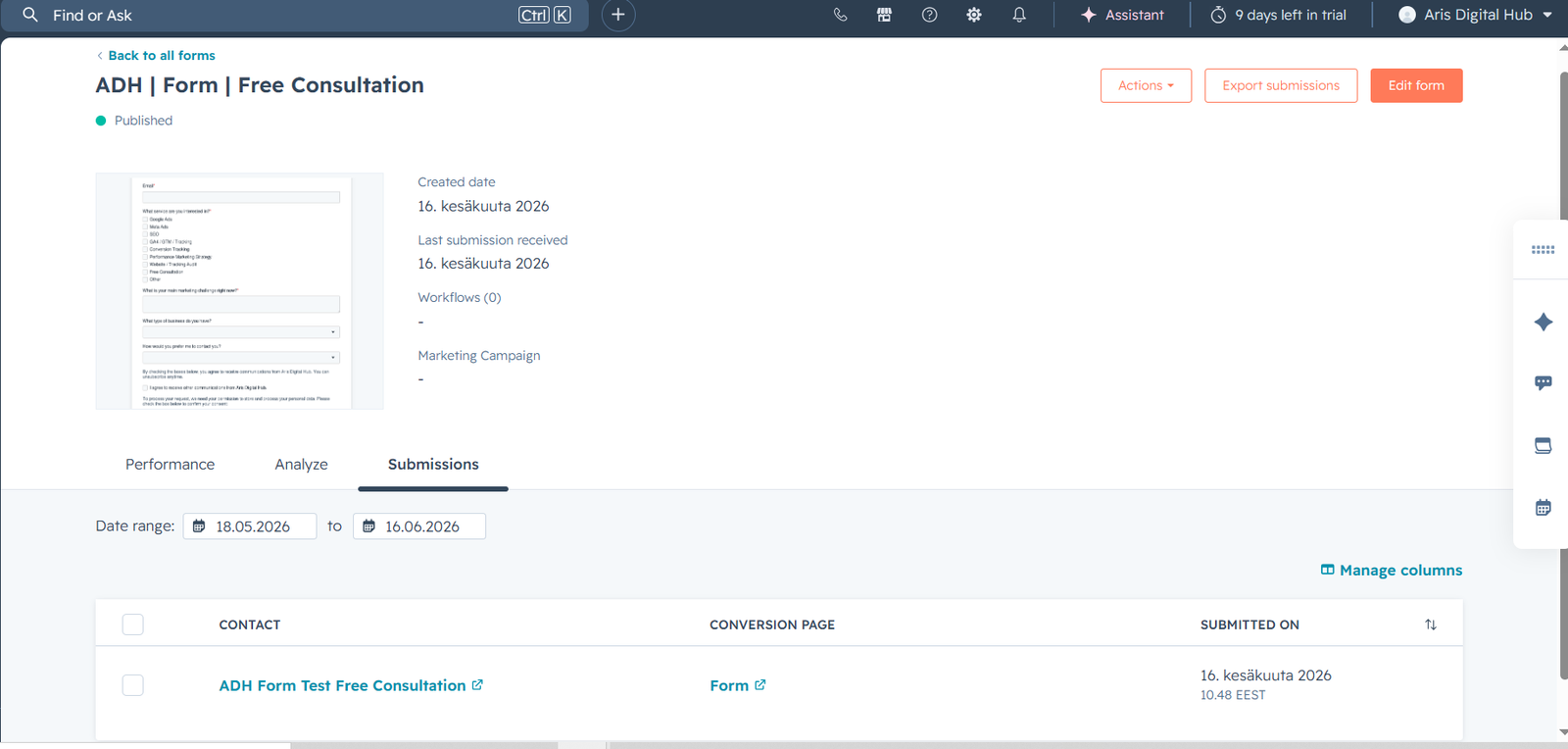
Built and published a Free Consultation form and tested form-to-contact creation.
Created demo lifecycle records, active lists and qualification segments.
Configured a practical deal pipeline with clearly labelled demo deals.
Created manual follow-up tasks and reusable message templates with personalisation tokens.
Documented the implementation, screenshots, boundaries and possible next steps.
Operating model
Free Consultation form
Contact and company data
Status, fit and priority
Discovery and demo deal
Tasks and templates
The model demonstrates an operating sequence. Follow-up tasks were created manually; advanced workflow automation was outside the exercise scope.
Approach
The exercise focused on the core objects and activities needed for a clear CRM setup. A consistent asset-naming convention supports navigation and documentation.
Custom Contact, Company and Deal properties cover service interest, lead source, consultation status, lead quality, business type, budget range, tracking status, business goals, proposal status and deal priority.
The Free Consultation form was built and published. A controlled test submission verified that it created a contact record in HubSpot.
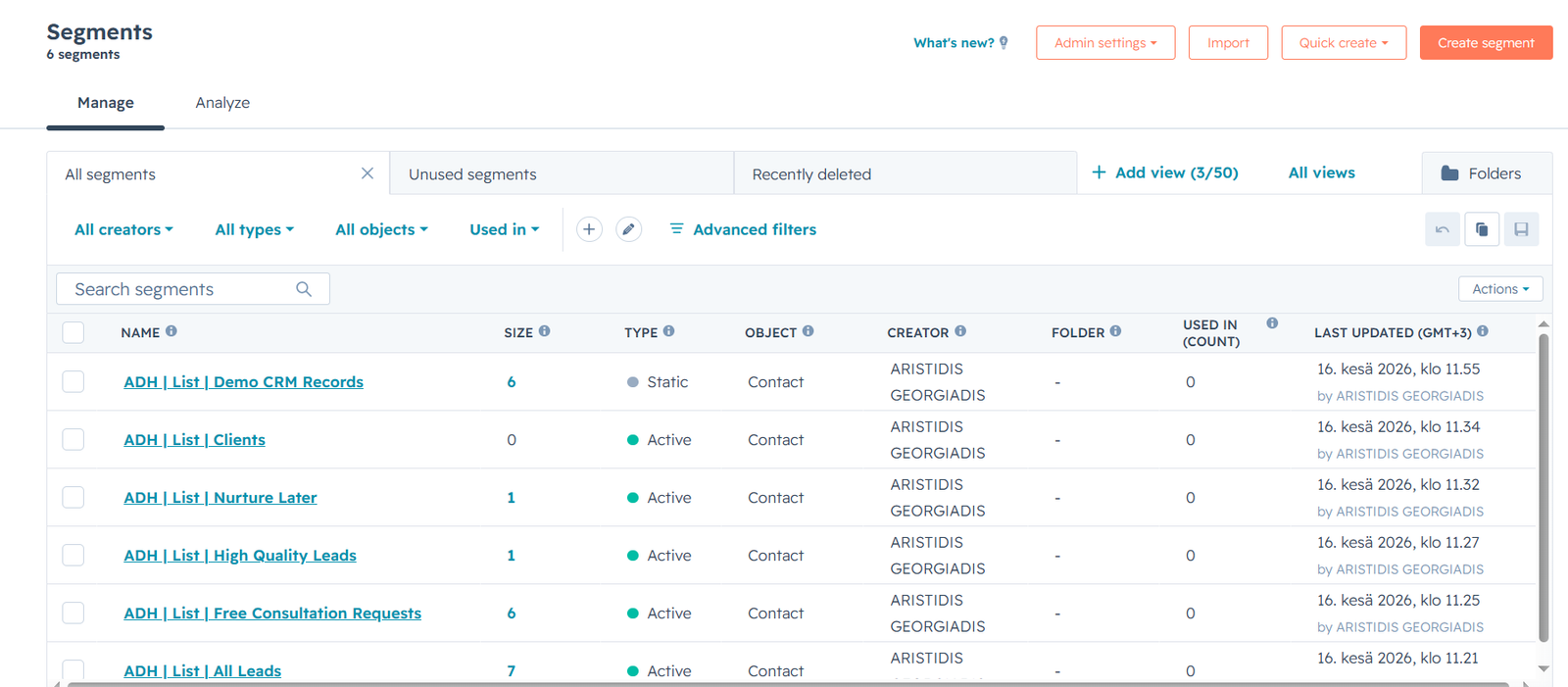
Demo records and active lists show how contacts can be grouped by interest, consultation status and qualification criteria.
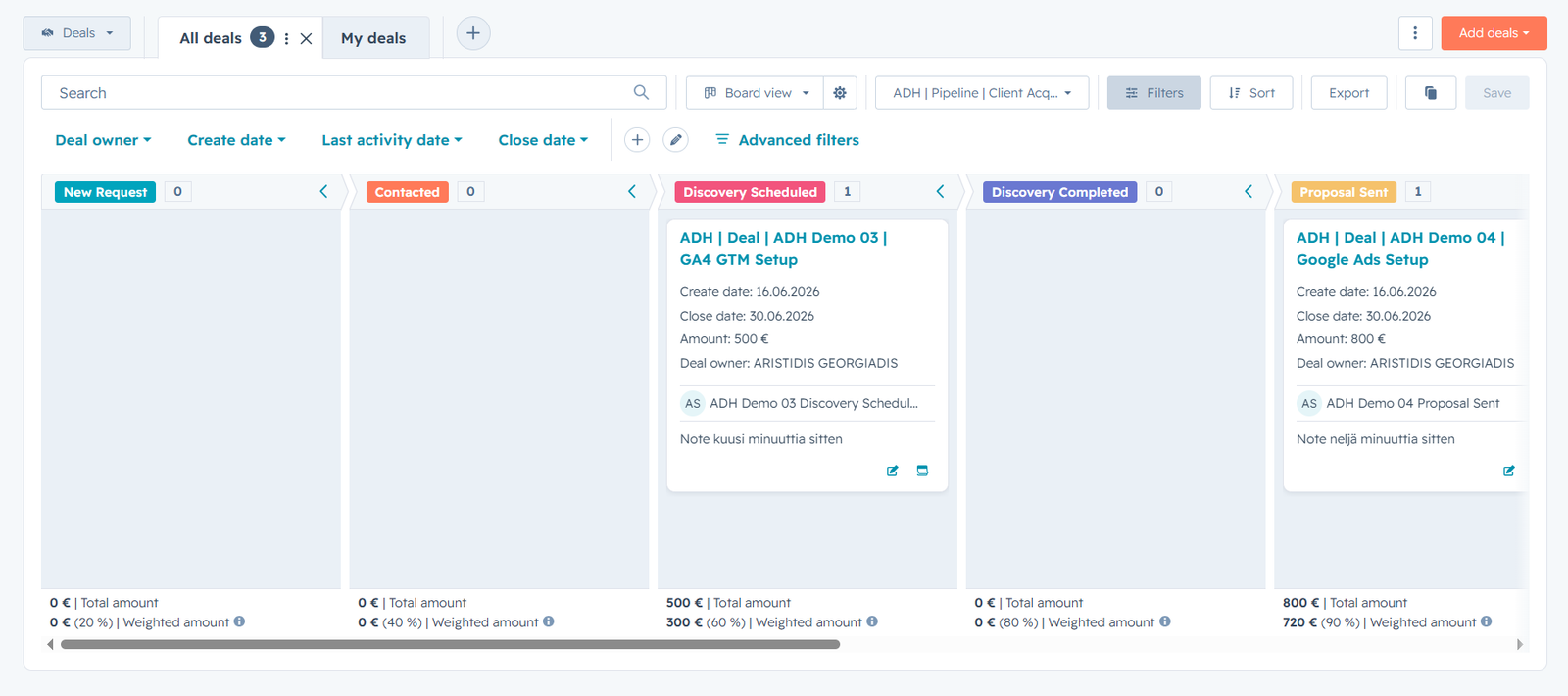
The pipeline runs from New Request through discovery, proposal and negotiation to Closed Won, Closed Lost or Nurture Later. Demo deals and manual follow-up tasks tested the operating logic.
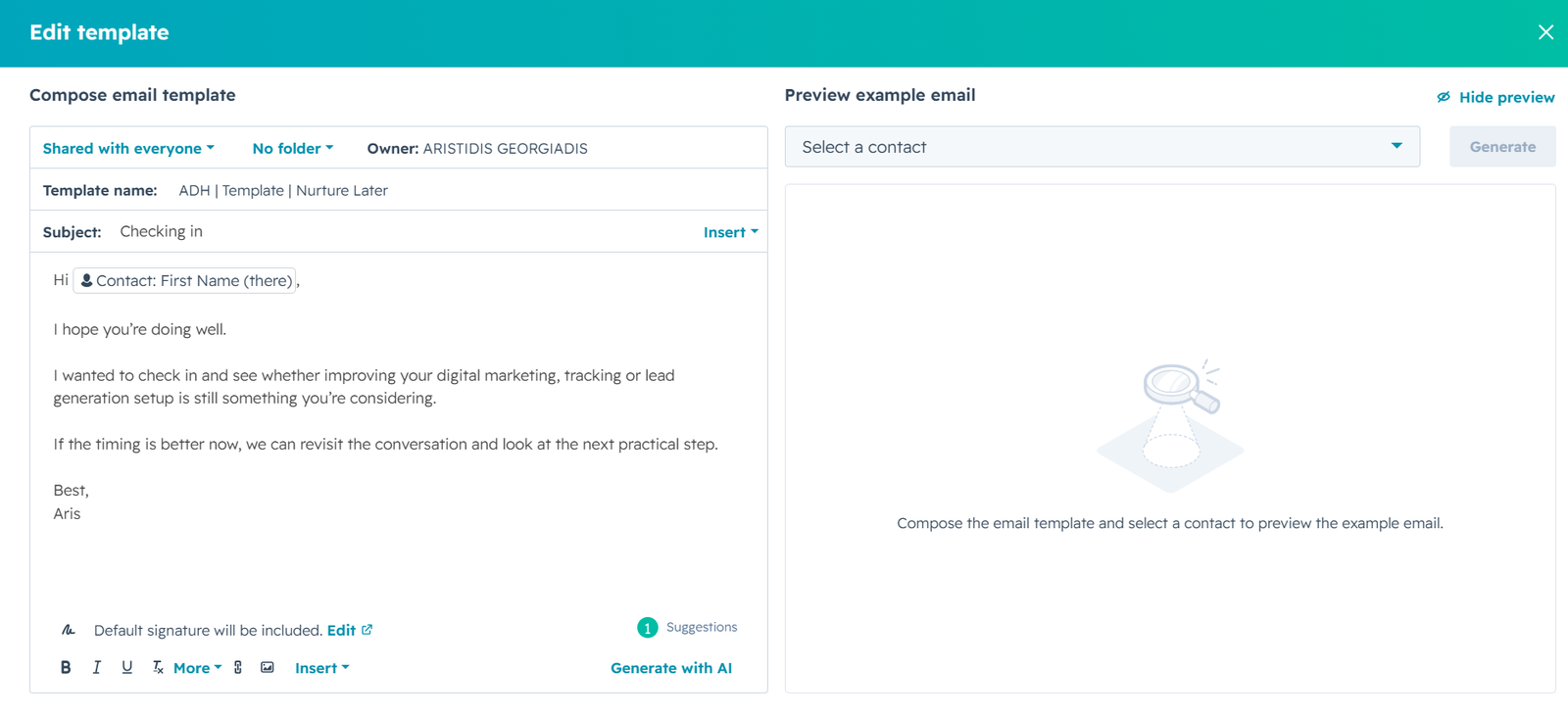
Message templates with personalisation tokens support consistent, adaptable follow-up. The exercise is not presented as a fully automated production system.
THE IMPLEMENTATION
Custom properties across Contacts, Companies and Deals supporting qualification and pipeline decisions.
A published demo form, tested through a controlled submission to verify contact creation in HubSpot.
Active lists, qualification segments and a staged demo deal pipeline supporting opportunity assessment and prioritisation.
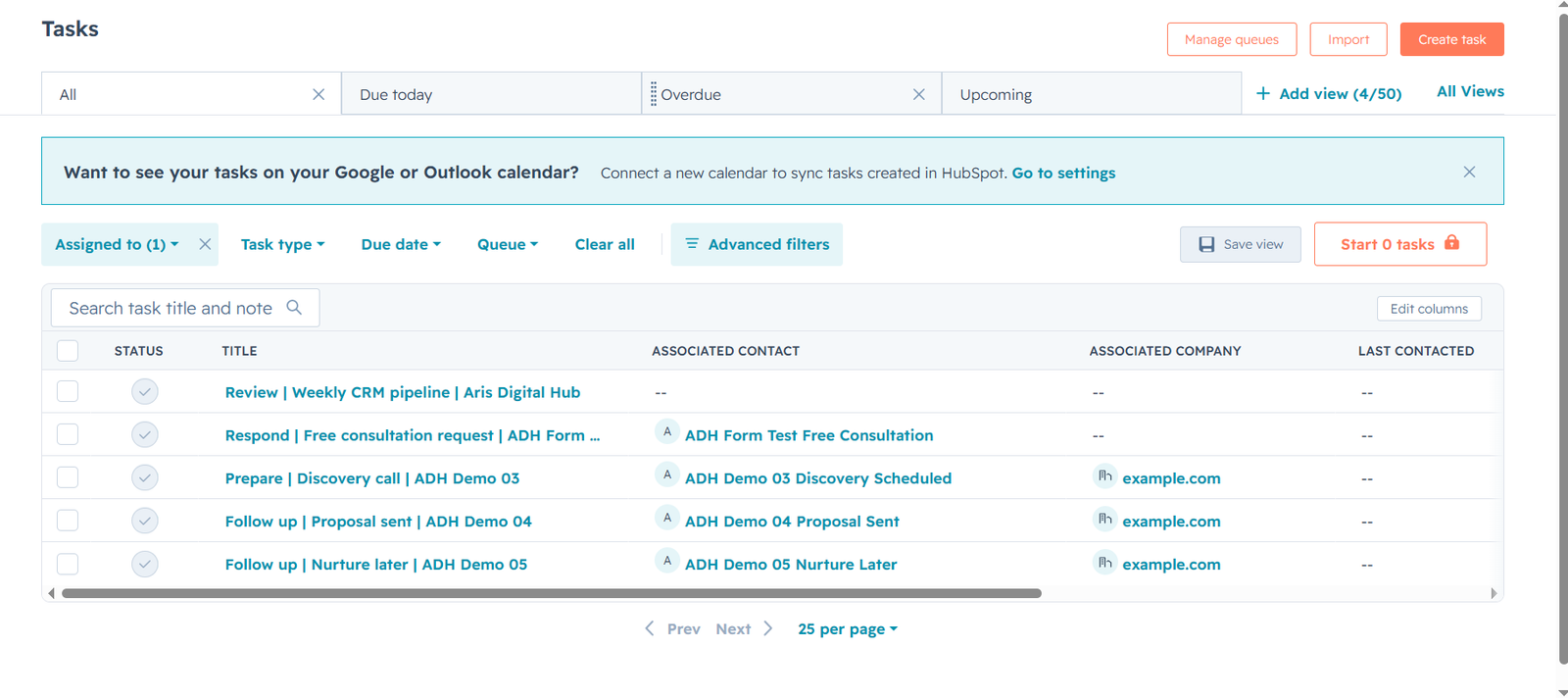
Manual next-action tasks and messages with personalisation tokens for organized, consistent follow-up.
INSIDE HUBSPOT
These screenshots document the core CRM setup: custom properties, the form, segmentation, the deal pipeline and follow-up. All come from the project’s demo environment and can be enlarged for closer inspection.
01 · DATA STRUCTURE
02 · LEAD CAPTURE
03 · PIPELINE MANAGEMENT
04 · FOLLOW-UP
Outcome
The project connects data structure, qualification, the deal pipeline and next actions in one workflow.
The practical outcome is a business requirement translated into a CRM system that can be demonstrated, tested and developed further.
What this project demonstrates